Digital Architecture
Invisible technical decisions and digital foundations. The "why" before the "how".
Digital architecture is not about choosing between React, Vue or Svelte. That is decoration. Architecture is about the fundamental organization of information and the systems that sustain it over time.
1. Information Architecture (IA)
Before drawing a pixel, you must draw the map. Most projects fail not because of code bugs, but because of concept bugs. Confusing taxonomies, incoherent navigation and lack of hierarchy make any site unusable, regardless of technology.
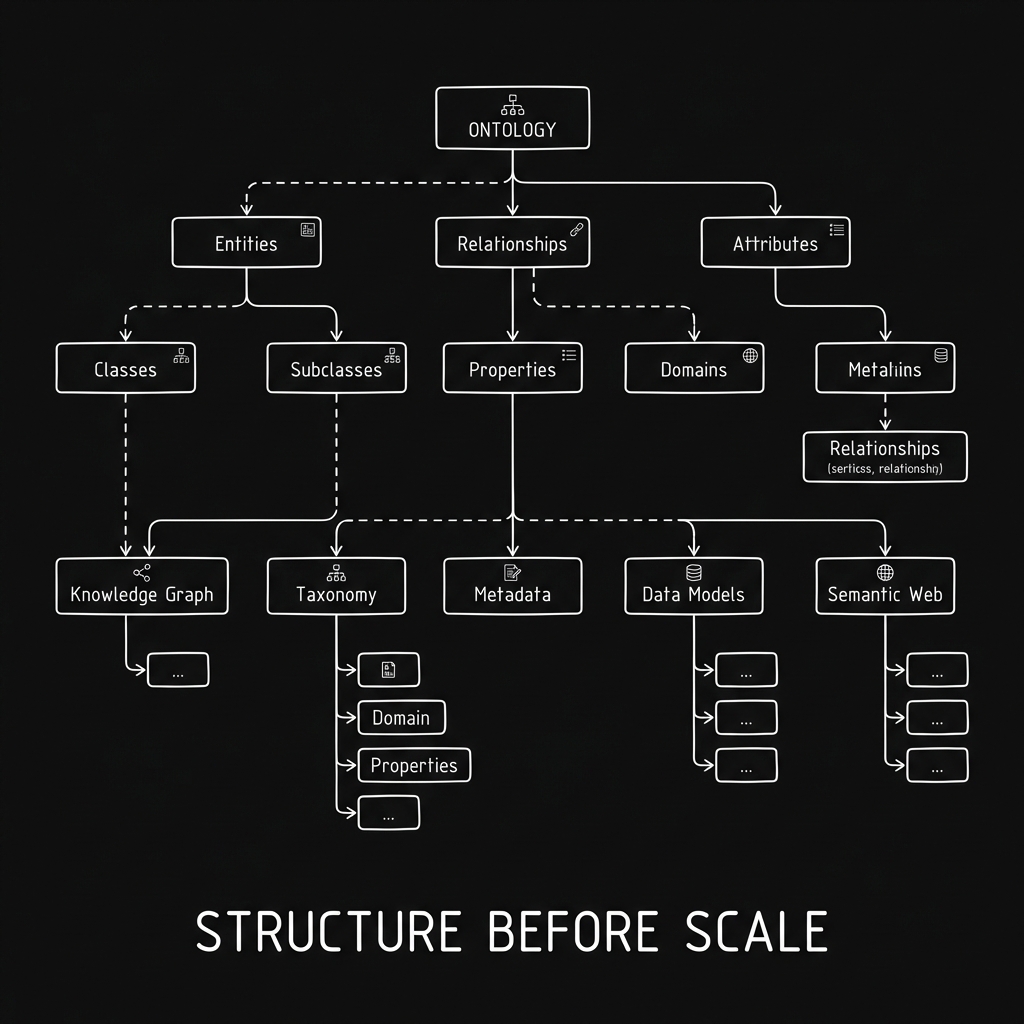
At ArcFox, we defend an Ontology-First approach: define the "things" (entities) your system manages and how they relate. Only then design the pages to show them.
2. Stack Minimalism
Complexity is the silent enemy of longevity. Each dependency you add is a future point of failure. Each new framework is technical debt waiting to mature.
Building with fundamental web standards (HTML, CSS, JS) instead of trendy abstractions ensures your project survives the "framework fatigue" plaguing our industry.
3. Invisible Decisions
The most important decisions are the ones the user doesn't see, but feels:
- Performance: Respecting the user's time and battery.
- Accessibility: Not excluding anyone by default.
- Semantics: Speaking the language of machines (search engines, screen readers, LLMs).
Good architecture is invisible. When it works, it seems obvious. When it fails, it is impossible to ignore.